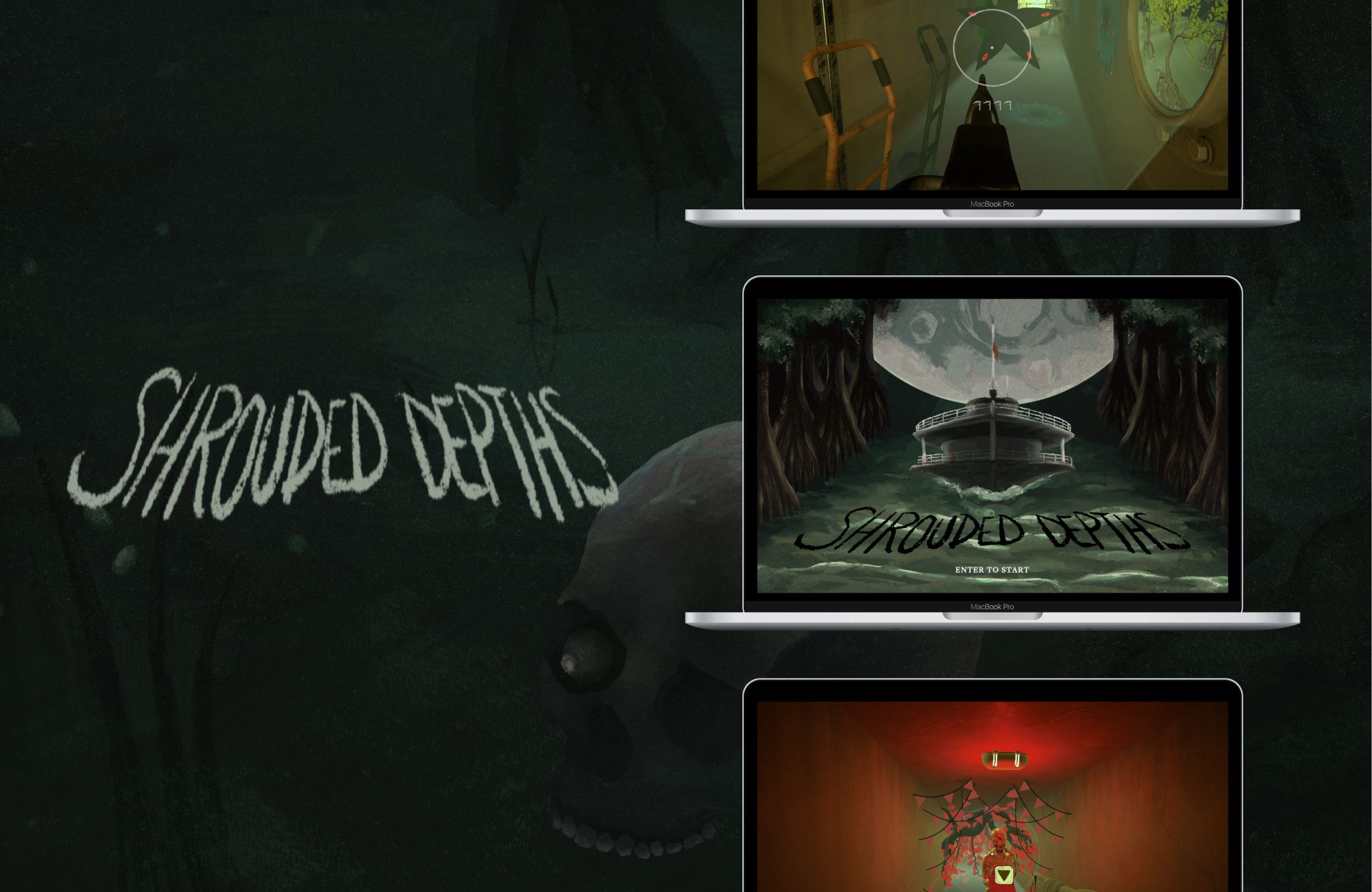
Shrouded Depths
During my senior year at Bradley University, I served as UX Lead on a capstone game project with a team of 30+ students. Alongside other discipline leads, I helped guide the project through a full end-to-end development cycle, culminating in a live showcase at FUSE.
• Led UX across a full production cycle (1 year)
• Delivered a playable, publicly showcased game
• Continued development post-graduation toward Steam release
The project was complex and often unstable, but it became a defining experience in leadership, adaptability, and real-world design constraints.
As UX Lead, I owned the end-to-end UI experience, from concept to in-engine implementation.
• Led a cross-functional UI team (artist, engineer, designer)
• Defined and maintained a cohesive UX vision
• Designed, iterated, and implemented UI directly in-engine
• Facilitated meetings, planning, and task prioritization
• Balanced team strengths, timelines, and shifting priorities
My role required both hands-on execution and team leadership to keep the UI consistent throughout development.
Building a game with a large, student-led team introduced significant complexity:
• Lack of clear creative direction early in development led to misalignment across disciplines and inconsistent design output
• Constant scope changes and faculty feedback created instability, forcing teams into reactive decision-making
• Risk of project failure, with concerns raised about whether the game would be ready for FUSE
Maintaining a usable, consistent interface under these conditions was a constant challenge.
To address these challenges, I focused on creating clarity, alignment, and a sustainable path forward for both the product and the team.
• Helped drive a full project reset, collaborating with team leads to evaluate existing work, redefine scope, and establish a clear, unified vision
• Reframed UX direction to prioritize clarity, cohesion, and feasibility within time constraints
• Realigned team structure and priorities, ensuring work matched individual strengths and supported the new direction
• Maintained UI consistency through change, adapting designs quickly while preserving usability and visual identity
• Supported team morale and communication, helping create alignment and confidence during a high-pressure pivot
This shift allowed the team to move from reactive development to a more focused, intentional process, ultimately setting the project up for a successful delivery.
The UI was designed for two key audiences:
• FUSE attendees
○ First-time players in a fast-paced showcase environment
○ Needed instant clarity and strong visual engagement
• Developers and faculty reviewers
○ Required a scalable, easy-to-iterate UI system
○ Needed clarity for ongoing development and feedback
Designing for both ensured the UI was intuitive for players and practical for production.
The project centered around one core principle: communication.
• Collaborated across design, engineering, QA, and production
• Led planning sessions to define UI needs and priorities
• Broke work into manageable tasks using Jira, sprints, and stand-ups
• Designed and implemented UI directly in-engine
• Continuously aligned UI with gameplay and technical constraints
This approach kept the UI consistent, functional, and production-ready throughout development.

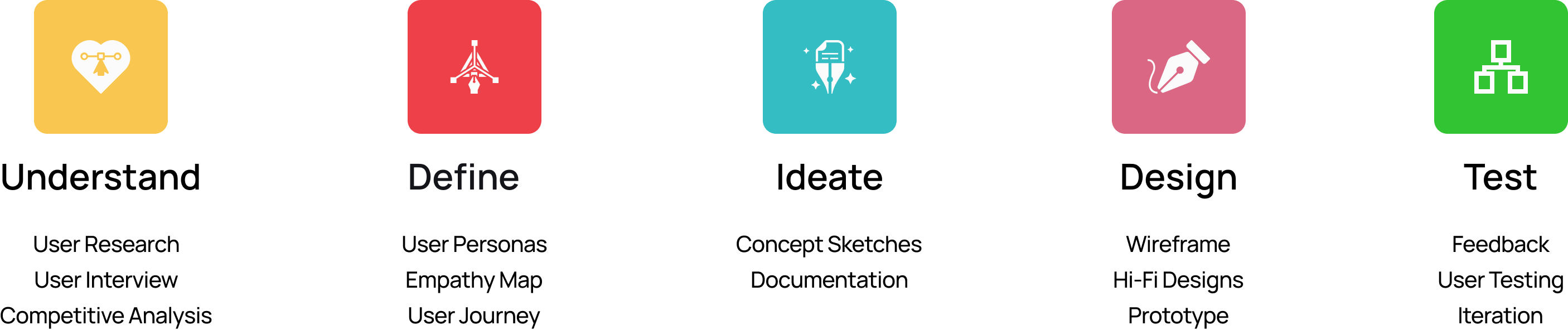
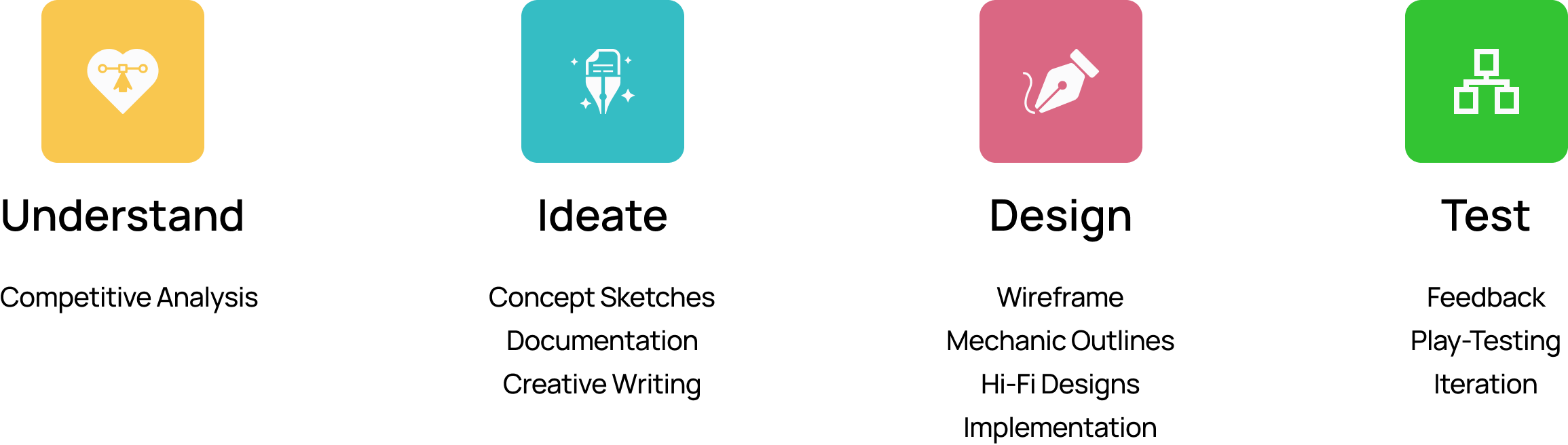
Focused on rapid exploration and team alignment:
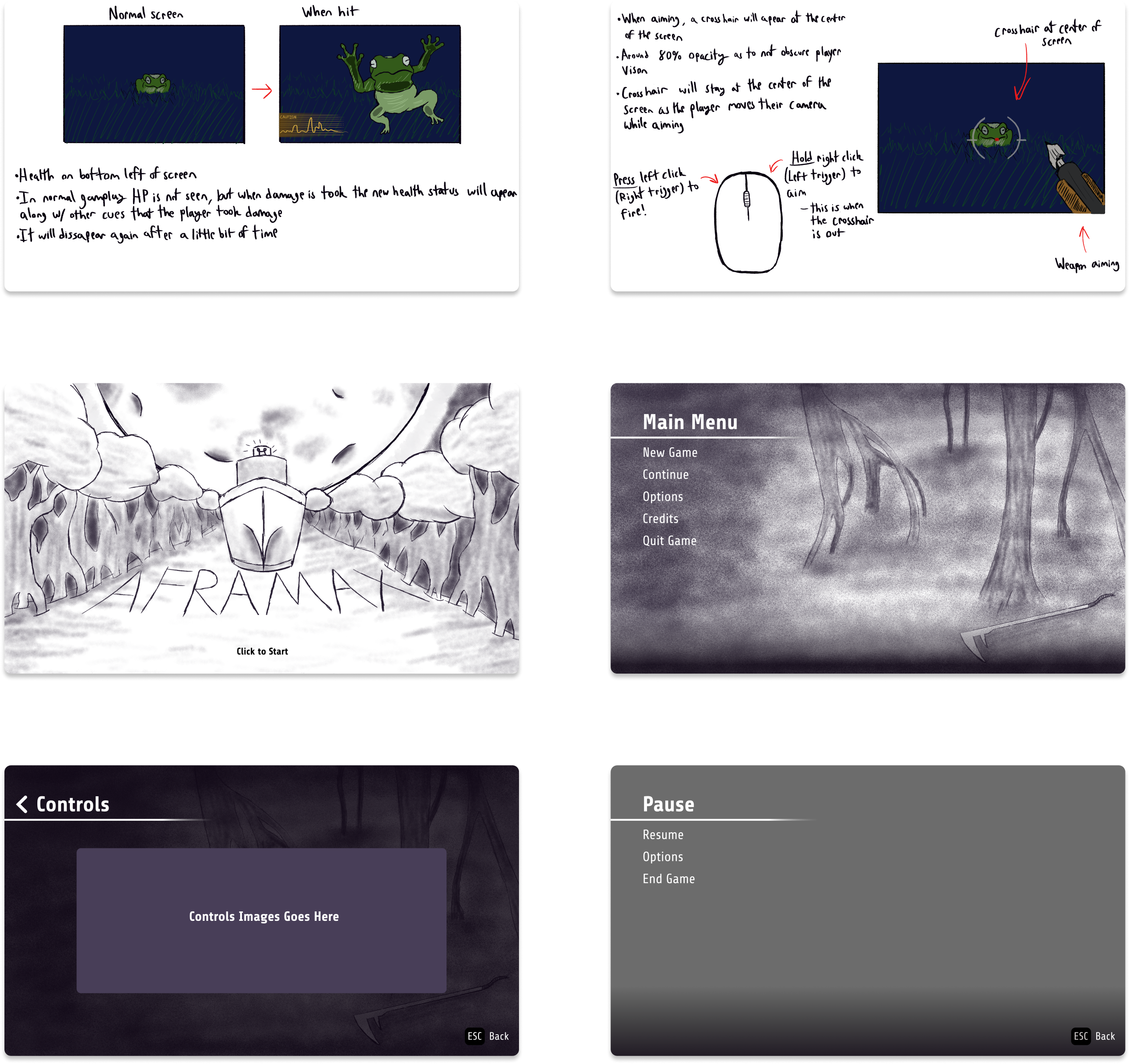
• Created sketches, flow diagrams, and low-fidelity wireframes to explore layout and interaction patterns
• Defined early information hierarchy and player flows before systems were fully built
• Used designs as communication tools to align artists, engineers, and designers
• Explored multiple UI directions to balance readability, tone, and gameplay clarity
Because the game was still evolving, flexibility was critical:
• Treated early designs as disposable and iterative, not final
• Incorporated feedback from gameplay, engineering, and production early and often
• Adjusted concepts quickly as features and mechanics changed
This phase helped establish a shared direction, allowing the team to move into production with clarity, alignment, and confidence.

As development progressed, the project faced significant instability, requiring constant adaptation:
• Scope continued to shift with no clear, unified vision
• Teams worked toward different ideas without alignment
• Faculty raised concerns about whether the project would make it to FUSE
• Progress became reactive, with solutions often acting as short-term fixes
Recognizing this, I worked with production and fellow leads to reset our direction:
• Led a 4–5 hour working session to evaluate the entire project
• Identified what was working, what wasn’t, and what needed to change
• Reduced scope and redefined a clear, focused vision
• Reallocated team members based on strengths and project needs
From there, I translated this new direction into actionable UI work:
• Reprioritized features based on updated goals and constraints
• Redesigned key elements like health UI and navigation flows
• Collaborated closely with my team to refine and align solutions
• Used Jira, sprints, and stand-ups to manage scope and execution
This shift marked a turning point. With a shared direction in place, the team became more focused, efficient, and confident, leading to a more cohesive experience and a successful delivery.
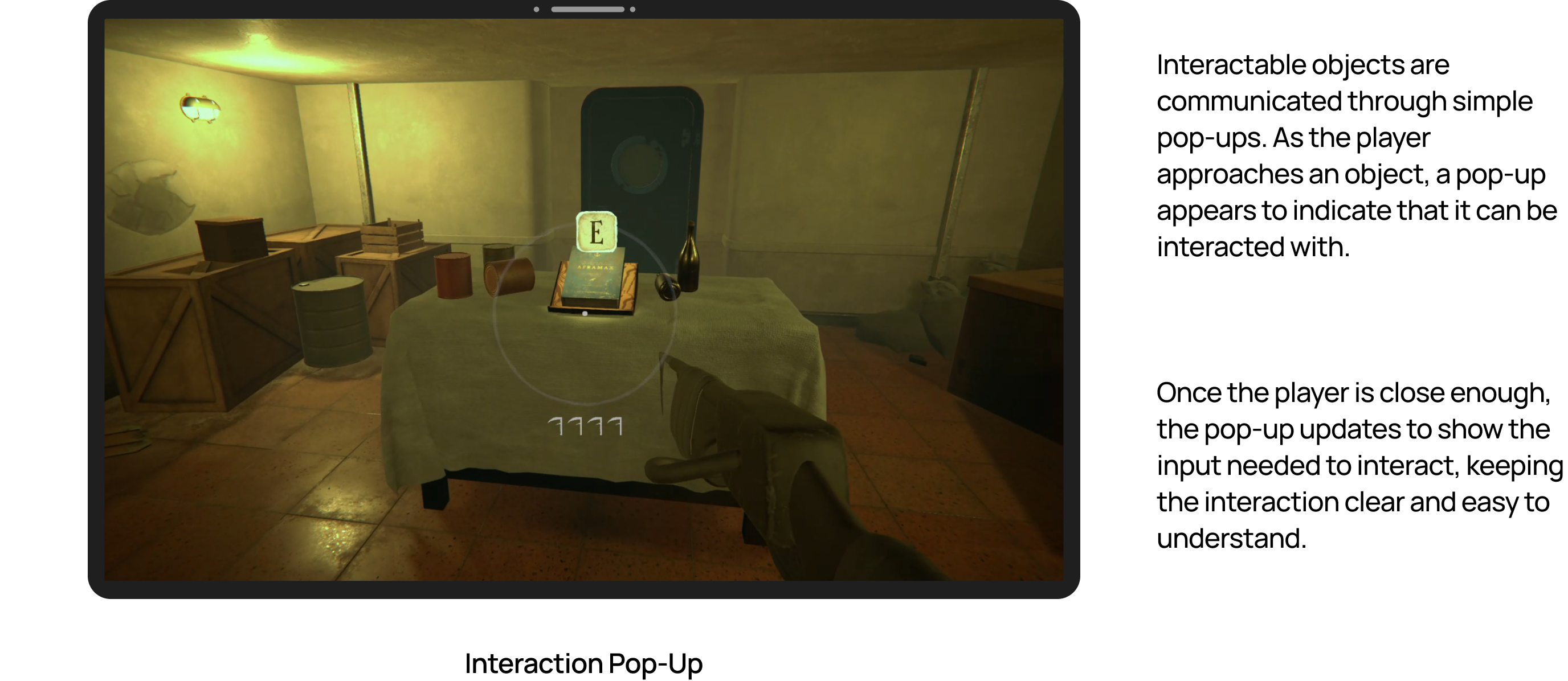
A core part of my role was bringing designs to life in-engine:
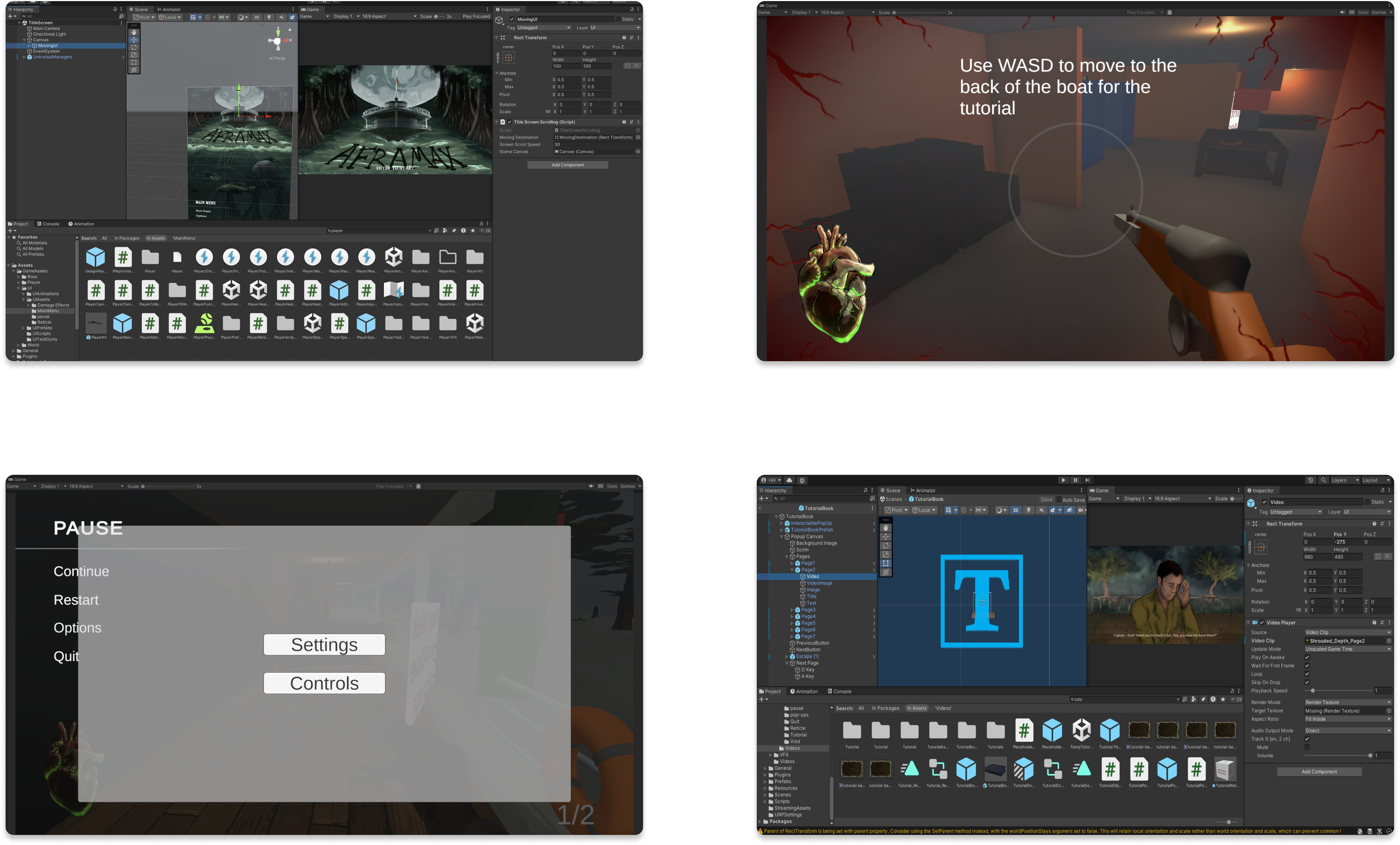
• Integrated UI assets and layouts into Unity
• Ensured designs were functional, polished, and responsive
• Collaborated with engineers and QA to refine behavior and performance
Highlight: Main Menu Implementation
• Prevented a key feature from being cut due to scope changes
• Leveraged pre-built assets and triggers from teammates
• Self-taught Unity Animator in one day to complete implementation
• Delivered a dynamic underwater transition menu
This not only saved completed work, but resulted in one of the most memorable UI moments in the game.

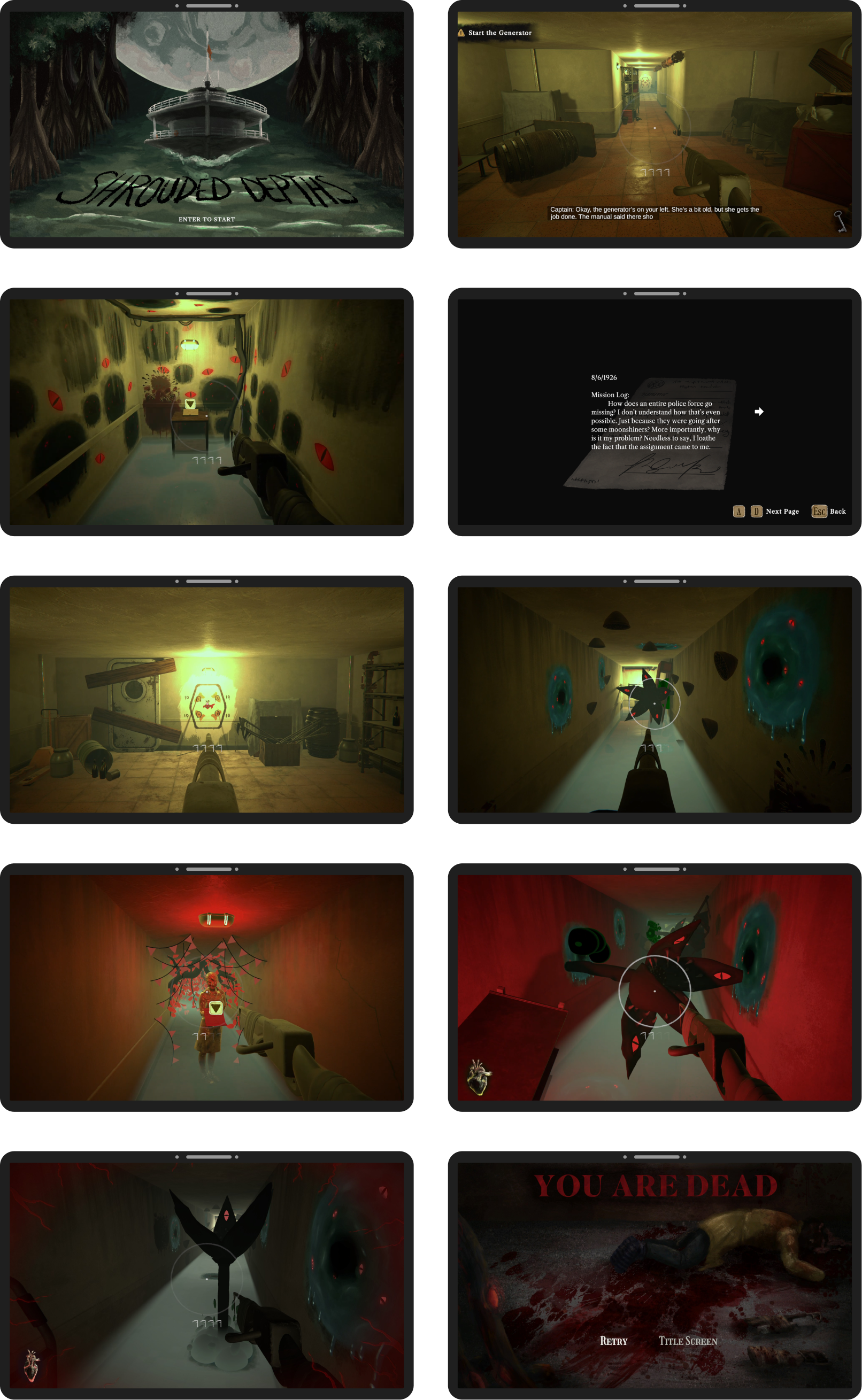
After a full year of iteration and collaboration, the final UI was:
• Polished and cohesive across all systems
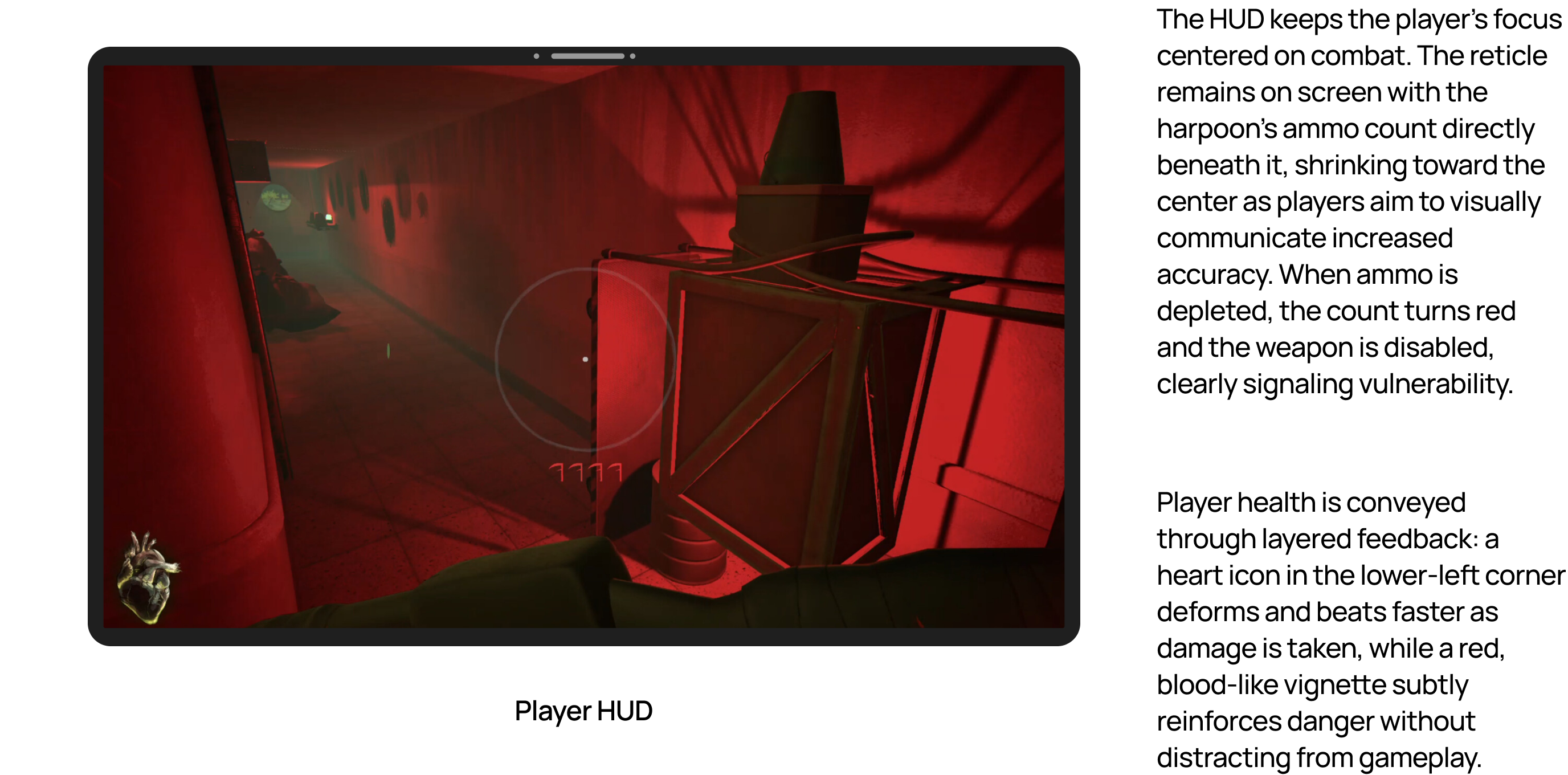
• Inclusive of key elements like HUD, menus, and tutorials
• Balanced between style and usability
• Fully functional within live gameplay environments
The final product reflected both the game’s tone and the team’s collective effort.


Despite development challenges, the final product was a success:
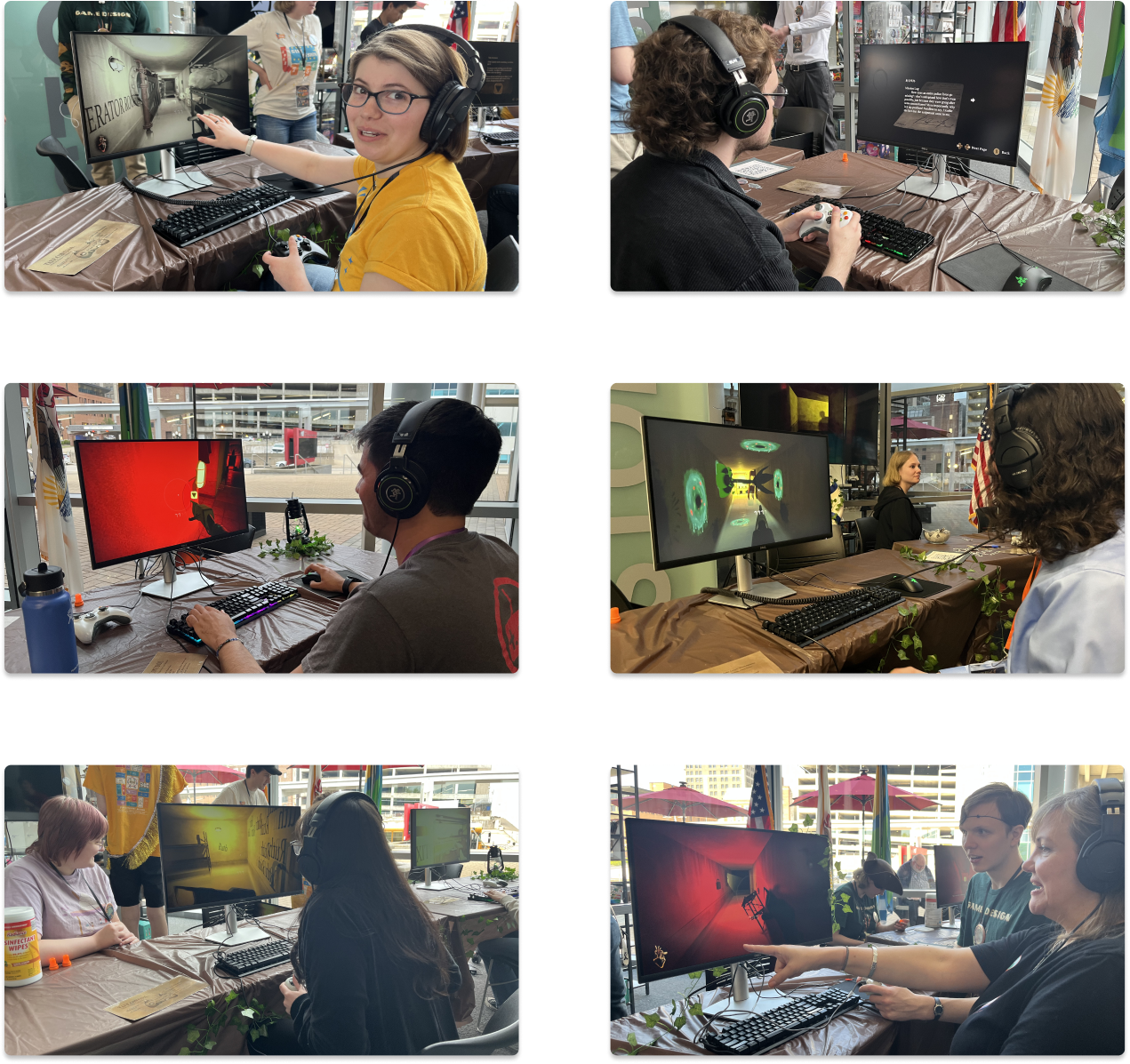
• Showcased at FUSE with strong player engagement
• Players responded with fear, excitement, and immersion
• Delivered a complete, playable experience under tight constraints
• Continued development post-graduation, leading to a Steam release with positive reception
• Helped lead a full project reset that turned a high-risk, unfocused product into a successful FUSE showcase and Steam release
Seeing players actively engage with the game validated the design decisions and team effort.
This project was a defining experience in real-world product development:
• Learned the importance of establishing clear vision early to prevent misalignment
• Gained experience leading through uncertainty and team-wide course correction
• Reinforced that addressing problems directly is critical, as avoiding them compounds risk over time
• Developed strong skills in resource allocation and time management
• Strengthened leadership through team coordination and decision-making
Most importantly, it reinforced that resilience and collaboration are what turn a struggling project into a successful one.